
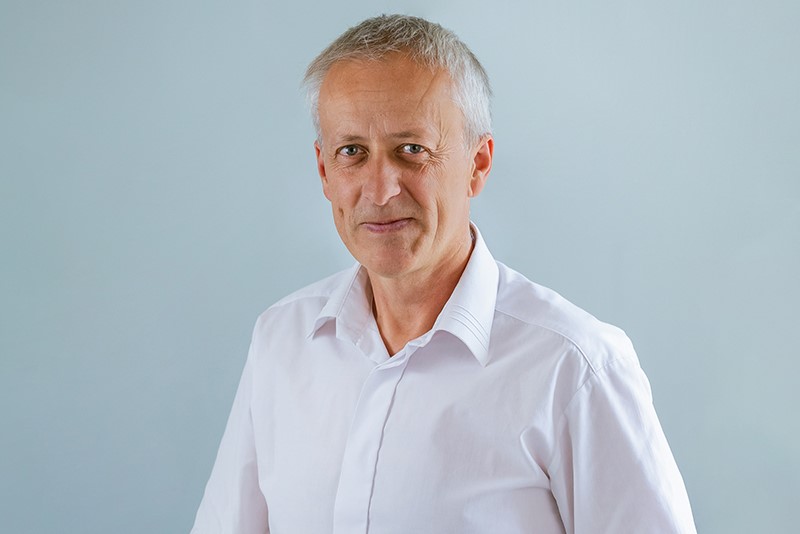
In an interview, Martin Škach, Director of the Electrical Engineering Division at ORGREZ, explains the most common issues customers face when connecting to the grid and how ORGREZ's many years of experience help meet the requirements of distribution network operators and ensure smooth UTP acquisition.
As part of the ORGREZ Electrical Engineering Division, you have launched a new service for verifying the properties of sources according to RfG (Requirements for Generators) rules. What was the main impetus for its creation?
The service was developed gradually. The first impetus came at the end of 2024, when it became clear that new sources would have to undergo testing as part of the UPOS process. Customers began to ask us if we could help them with this. It is an area where it makes sense to offer our experience, so we responded quickly and have been providing the service as standard since 2025.
When you talk to investors or operators of new sources today, what bothers them most about the UPOS process and obtaining a UTP?
It's a new environment – not only for investors, but to a certain extent also for the distributors themselves. Customers often get lost in it, they don't know exactly what to expect, and they are concerned that the process will be unnecessarily delayed. We try to help them understand it and simplify the whole process for them as much as possible so that it does not burden them unnecessarily, either administratively or technically.
Where do you see the biggest technical or organizational difficulties?
The verification itself is a set of tests, which are also very diverse. Some of them are performed using simulations, while others are tested directly on site. Preparation is key – high-quality input data, a properly constructed test plan, and a team of people who understand both simulations and field measurements. Organizationally, it is quite demanding.
So who is the service primarily intended for?
Primarily for investors in new sources connected to the distribution system, typically smaller capacities. ORGREZ has long had a strong position in sources connected to the transmission system, but our role is growing rapidly in the smaller sources segment.
And all these sources must now meet the RfG requirements?
Yes. The composition of sources is changing fundamentally, but the network itself remains essentially the same and must ensure a reliable supply of electricity. New sources must therefore actively contribute to the stability of the system. Back in 2016, the European Commission set out the basic requirements for new power plants. In our country, these requirements were incorporated into legislation in 2024, and now is the time to verify in practice that the new sources actually meet what is expected of them.
What do you think makes ORGREZ's approach in this area unique? What do customers appreciate most?
Our great advantage is our experience as a certifier of ancillary services. We have also been involved in power output, voltage regulation, and grid stability for a long time. So if a customer needs their source to not only meet UPOS requirements but also be ready to provide ancillary services, we can provide a comprehensive solution.
How important is your practical experience with resource planning and operation, metering, and your own laboratory facilities in this new service?
It is essential. We have a large team of experienced experts at our disposal, which we always assemble according to the specific type of source, from asynchronous renewable sources to classic synchronous generators. Thanks to our experience in planning, operation, and measurement, we are able to go into great depth and prepare a highly professional team that understands the specific technology and its behavior in the grid.
Are you considering further formalization of the service, for example in the form of accreditation?
Yes, we are monitoring market developments. It is possible that in the future, tests will only be able to be performed by accredited entities. We are prepared for this—we have the laboratory facilities and experience to draw on. If the market and legislation come to this, we will of course apply for accreditation.
Finally, on a personal note – if you weren't working in the energy sector, what would you probably be doing?
To be honest, I have to say that I haven't felt like "quitting" yet. The energy sector has been extremely dynamic over the last twenty years, with new challenges constantly emerging and people having to constantly learn and improve. I consider this a natural and important part of the profession. I would definitely stay in some technical field – I've always been interested in mathematics and physics. At the same time, I've always been attracted to working with other experts, which is very strong in the energy sector – there are a lot of people here who are passionate about the field.
Learn more about the service on this website.