
Energy costs are no longer a predictable budget item. They have become a variable that companies often cannot influence on their own—but one that has a significant impact on them.
“Energy is no longer just a cost item. It’s a factor that directly affects overall performance. And the difference between companies today often lies not in the price of energy, but in how much control they have over it,” says Jan Hanus, CEO of ORGREZ ECO.
Until recently, it was enough to “lock in a favorable energy price” and then not pay much attention to it. Today, this model no longer works. Not because companies are making mistakes, but because the global environment has changed. Energy has become a geopolitical commodity whose price is determined by factors beyond our control—ranging from conflicts and the availability of raw materials to regulatory interventions and pressure to phase out coal.
Starting Point: The Audit as Both an Obligation and an Opportunity
The first step toward taking control is often a document that many companies and municipalities view as a necessary evil: the energy audit. The law directly imposes this obligation on certain entities, but in ORGREZ ECO’s approach, the audit transforms from a bureaucratic formality into a foundational strategic document.
“We view the audit as a cornerstone. It allows us to fulfill our legal obligation, but we also take advantage of the opportunity to collect data in a standardized way and add our own tailored approach—a concrete path to savings and modernization,” explains Jan Hanus.
There are two types of clients. The first group knows they have an obligation but doesn’t want to address it until they’re required to. For the second group, the audit is just the beginning. They want a comprehensive strategy because they understand that waiting for a legislative mandate means wasting both time and money. Unlike a bare-bones audit, a strategic document defines a long-term vision for energy self-sufficiency.
What Changed in 2022
The year 2022 only accelerated and brought this shift into sharper focus. When the price of electricity on the exchange skyrocketed to nearly a thousand euros per megawatt-hour, it became clear just how fragile the notion of a stable energy market really is. Projects that would not have made economic sense just a year earlier began to be implemented within weeks. Companies reacted quickly, often under pressure and without a broader context. Today, the situation appears to have calmed down at first glance, but the underlying uncertainty remains.
This is precisely where the difference begins to emerge between active players and those who are merely following the events unfolding around them.
Where Companies Really Lose Money
ORGREZ ECO’s experience reveals a recurring pattern. Most clients don’t come to us wanting to fundamentally change their approach to energy. They come with a specific problem: high consumption, an outdated energy source, a grant opportunity, or a legal requirement. The topic of energy only comes up when “the fire is already burning.” But that’s precisely the most expensive scenario.
A large portion of these losses doesn’t occur in places that are immediately visible. They arise from day-to-day operations that have been running inefficiently for a long time. Many companies’ energy management systems operate beyond their optimal lifespan, without a deeper understanding of their operations. Yet even the systematic monitoring and evaluation of consumption alone can yield significant savings without the need to invest in new technology.
“Companies often have no idea where their energy is actually being wasted. Not because they don’t want to address it, but because they lack data and don’t view their energy management as a whole,” adds Jan Pařízek, head of the Municipalities and Environment Department at ORGREZ ECO, noting: “It’s almost astonishing how much energy they expend, for example, on selecting furniture or saving a few thousand on their vehicle fleet, while in reality, hundreds of thousands may be disappearing in their energy sector.”
The Biggest Mistake: Addressing Energy Issues Piece by Piece
An even more fundamental problem, however, lies in how companies think about energy. They often address it in isolation, piece by piece. Individual measures make sense on their own, but they don’t make sense as a whole. As a result, the investment is made, savings are realized, but the overall effect falls short of expectations.
“If you have an old house and replace the boiler, you’ll save money. And if you then insulate the house, you’ll save again. But at the same time, you’ll realize that your boiler is unnecessarily large. And that’s exactly how companies operate, only on a much larger scale,” explains Jan Pařízek.
In industry or the energy sector, such a mistake no longer amounts to tens of thousands, but to millions of crowns. And that is precisely why it’s not enough today to simply look for savings. It’s not even enough to “buy cheaper.” Price is a variable that a company cannot control. The real problem lies elsewhere—in the fact that most companies’ energy management lacks internal autonomy and clear strategic direction.
From Data to Decision
In practice, this means starting differently. Not with technology, but with data. Not with a product, but with an understanding of operations. ORGREZ ECO therefore enters projects at a stage when, as a rule, no decision has yet been made on a specific solution, but rather on how to approach the entire concept in the first place. We analyze the current state, collect data, assess realistic options and long-term trends, and only then do we develop options for the next steps. These steps can take various forms and involve different phases—from energy audits through concepts and strategies to specific projects and their preparation. What is important, however, is that they always stem from a single foundation: an understanding of the reality of a specific operation and all its context.
This approach is rooted in the ORGREZ Group’s engineering DNA and decades of experience in real-world operations. Our output is not a theoretical study, but a technically feasible concept with a clearly defined path to implementation. Crucially, ORGREZ ECO does not enter the process as a technology supplier. It does not push a specific solution but seeks the one that makes sense in the given context. In an environment where many market players naturally steer clients toward their own technology, this independence is key.
When Energy Makes Sense
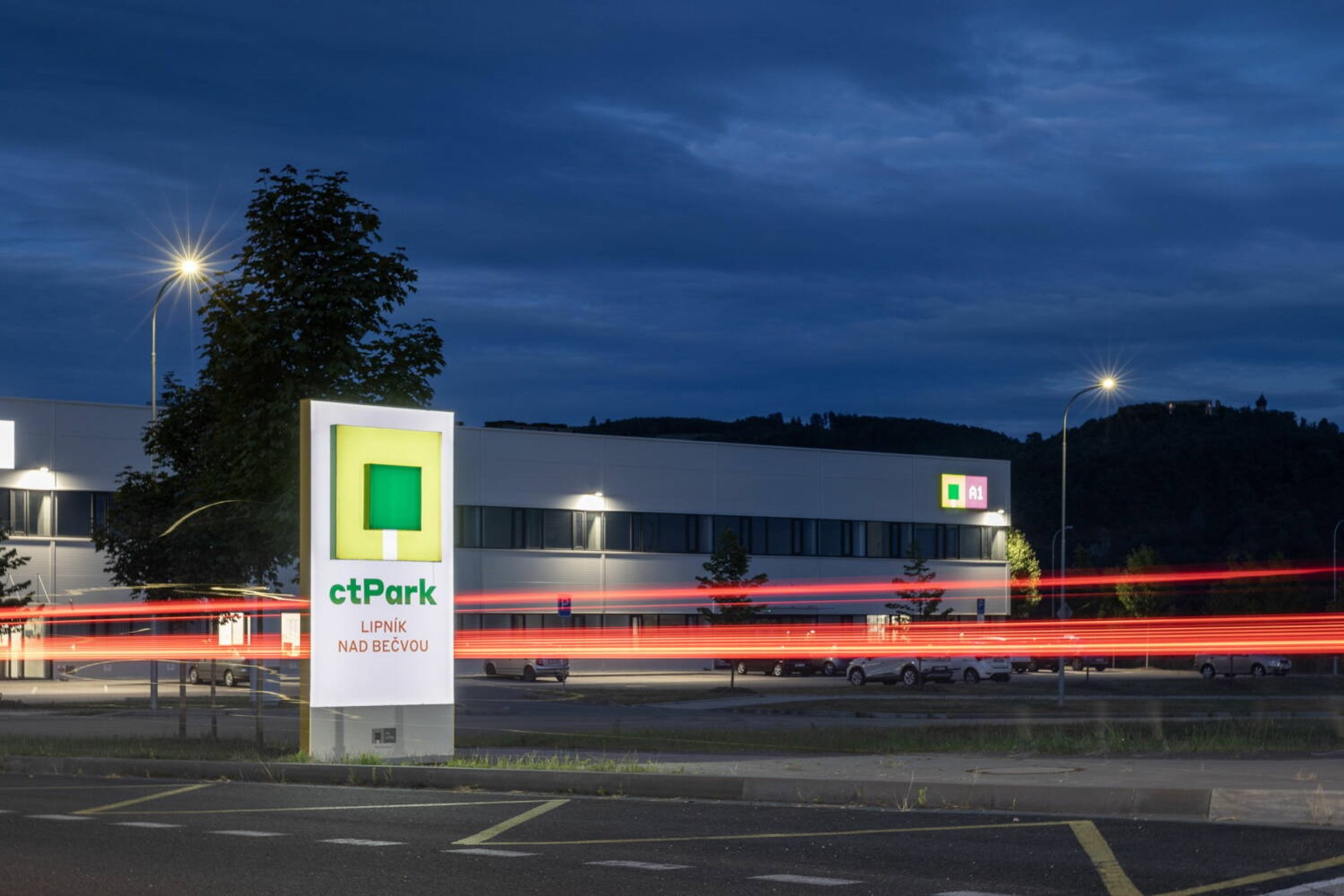
“A real-world example is our collaboration with CTP Invest,” says Jan Pařízek. “For their industrial park, we designed a comprehensive energy system that addresses one of today’s most common problems: insufficient grid capacity.”
By combining cogeneration, batteries, and the smart use of waste heat for cooling and steam production, we created a system that is not only self-sufficient but, thanks to its integration into power balancing services, can also generate new sources of revenue.
“Furthermore, this solution has prepared the park for future expansion without having to wait years for a new connection from the distributor, and it significantly contributes to meeting decarbonization goals and BREEAM certifications, which are key parameters for this type of project,” adds Jan Hanus. Energy management has thus become a controlled system with clear logic.
Energy as a Direct Impact on Profit
And this is precisely where energy meets business. Every savings, every properly implemented measure, and every data-driven decision has a direct impact on a company’s bottom line. It’s not just about technical improvements, but about a real impact on costs, profitability, and financing capacity. Moreover, in today’s banking environment, energy efficiency directly influences a company’s credit rating and ESG score.
From a financial management perspective, this means one thing: optimization translates directly into operating results, with no intermediaries. Saved resources or excess revenue from in-house energy generation immediately impact the performance of the entire organization.
Companies that are not addressing energy efficiency today are not standing still—they are gradually losing their competitive edge. This is not only due to prices, but also to growing market demands, regulatory pressure, and the expectations of business partners. What was considered a “nice-to-have” just a short time ago is now becoming the standard.
Getting started doesn’t mean investing millions. It means understanding where the company truly stands. It means having real data at your disposal, defining your energy baseline, and beginning to make decisions systematically.
“The moment you start addressing energy issues only after the problem is visible in the numbers, you’re just playing catch-up. It makes sense to start when you’re still the one making the decisions. The energy of the future isn’t about finding the cheapest megawatt-hour. It’s about management’s ability to transform energy flows into a predictable and fully controlled system. Because what you don’t measure, you don’t control—and what you don’t control ultimately controls you,” concludes Jan Hanus.
You can read more about this reference here.