
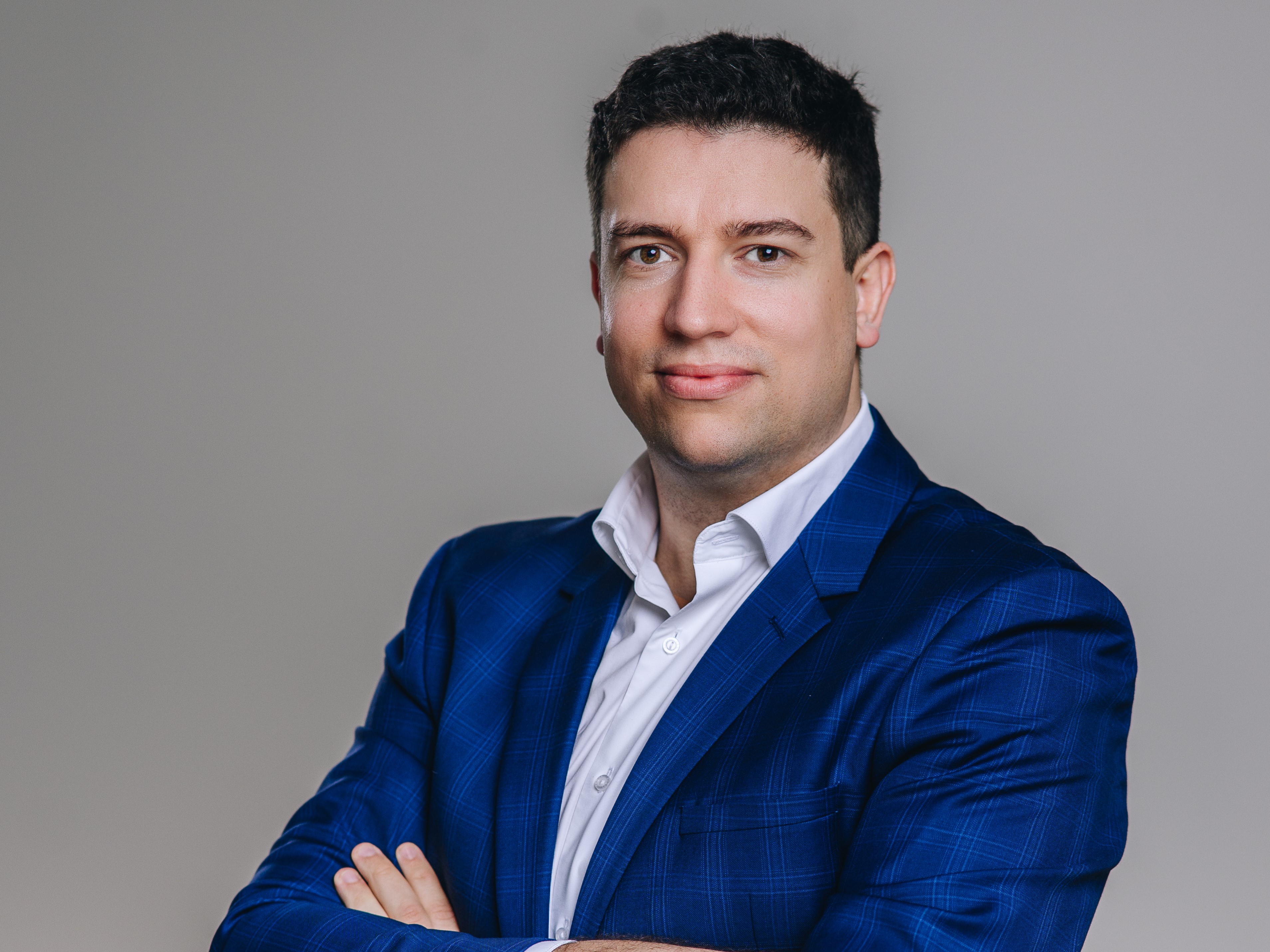
Vojtěch Vavřička has moved from his position as director of ORGREZ's Environmental Systems Division to head ORGREZ TRADE, where he is launching a service that can increase heating plants' revenues from flexibility and significantly reduce heat production costs. In this interview, he speaks openly about the transformation of the energy sector, why old models are no longer sufficient, and how ORGREZ TRADE is changing the rules of the game.
What does the transition from division director to head of the new company ORGREZ TRADE mean to you personally?
It is a very important professional moment for me. After years of focusing primarily on technical management, I am moving into a role that combines strategic responsibility with the opportunity to build something completely new. At ORGREZ TRADE, I have the opportunity to manage a company that has the potential to fundamentally influence the way modern energy sources are operated and commercially exploited in Czechia. And because I know very well how high-quality solutions and know-how we have available within the entire ORGREZ group, I am looking forward to putting our services into practice and showing customers that smart portfolio management can really change the economics of their energy sector.
Why is now the right time to launch this service?
The energy sector is undergoing rapid change. The market has become much more dynamic and competitive, and traditional operating models are no longer sufficient. Today, heating plants and industrial complexes combine multiple types of resources and must work with them in such a way that they can respond quickly to market fluctuations and take advantage of every opportunity to increase the profitability of their assets. Flexibility is no longer an add-on, but a necessity. And a service that can integrate technical data from operations with business strategy and turn it into concrete economic results is exactly what operators need today. That's why now is the right moment.
What needs or problems do operators most often deal with today, and what does ORGREZ TRADE primarily respond to?
In short, it is mainly about the economics of operation. On the one hand, input costs are rising, and on the other, there is constant pressure to keep heat prices acceptable for cities, municipalities, and end users. Operators are therefore looking for new sources of income that will enable them to stabilize the entire system and keep prices at an acceptable level. This is where ORGREZ TRADE comes into play. We can identify market opportunities in real time, whether they arise in day-ahead trading or on the intraday market. We monitor when it is advantageous to increase production, when to reduce output, and how to translate specific market signals into resource operation in order to be as efficient as possible. Smaller heating plants and industrial sites usually cannot afford their own trading team, which is simply the reality of today's market. We provide them with this expertise as a service – professionally, affordably, and without the need to invest in their own capacities.
How can ORGREZ TRADE change the way operators plan their operations and work with flexibility in the long term?
In the long term, it is mainly about greater stability and faster return on investment. Flexible sources such as cogeneration units, heat pumps, electric boilers, or storage only make sense if they are managed intelligently. And this is where I see the greatest benefit of our service. Operators who do not yet have new sources must already take into account in their designs that flexibility will be an essential part of their future operations. And thanks to the fact that we have ORGREZ ECO in our group, which designs modern heating plants with flexible operation in mind, we can help customers not only with management, but also with ensuring that their technology is truly ready for future management. Combined with the ORGREZ TRADE business strategy, this creates a comprehensive system that provides operators with greater stability, better returns, and the ability to keep heat prices at a reasonable level in the long term.
How does the integration of online operation planning with trading work in practice, and what specific benefits does it bring to customers?
In practice, it starts with the installation of our ORGBOX device. It connects to the heating plant's control system and allows us to collect and evaluate data from all sources in detail. Our optimization model runs on this data, constantly working with current market prices, meteorology, and technological operating limits. Every day, we create an operating plan that reflects what is profitable to produce, when it is better to use storage, and when it makes sense to send energy to the market. Initially, we fine-tune this plan together with the customer, but once we have collected enough operational data, we take over the planning so that the heating plant can operate without unnecessary intervention. The customer can be sure that their system is managed as efficiently as possible, which translates into lower costs and better utilization of commercial potential. And as we often say to our customers quite openly, the main benefit for the customer is the certainty that they have the most efficient method of heat production, which, when all is said and done, simply means that they will have lower prices for input commodities, typically gas, and, of course, higher profits at the end of the year.
If you weren't involved in the energy sector, what would you probably be doing or what would you enjoy doing?
I would probably end up cooking, because I really enjoy it and it's a kind of mental hygiene for me. And if I went in the completely opposite direction, I've always been attracted to the work of a war reporter. It's a profession full of risk, adrenaline, and powerful stories, and from a certain perspective, I'm fascinated by its intensity and the courage it requires.