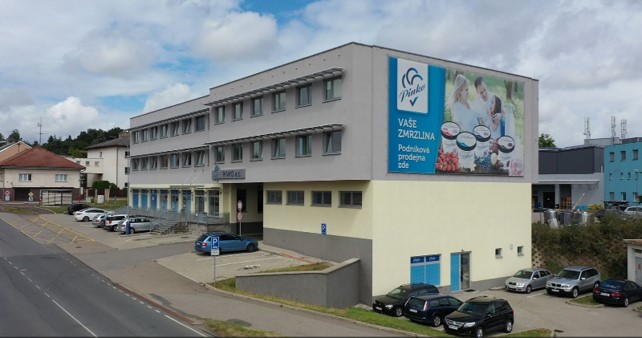
Challenge: To increase energy self-sufficiency without unnecessary investment
The aim of the project was to produce a conceptual study assessing the possibilities for installing new energy sources – primarily combined heat and power units – to meet the energy requirements of PINKO’s production site. The brief included proposing a solution that would increase energy self-sufficiency and ensure a reliable supply of heat, electricity and cooling, whilst maintaining the economic efficiency of operations.
Solution: From an analysis of the initial situation to a range of proposed solutions
The first step was to analyse and assess the current state of the production site’s energy management. This was followed by a technical proposal for new energy sources and an evaluation of the various options.
We examined two primary concepts:
- a combined heat and power unit supplemented by heat storage, a heat pump and other auxiliary sources
- a trigeneration system, combining a cogeneration unit with an absorption chiller to simultaneously generate electricity, heat and cooling
The study also included an assessment of the use of waste heat from the production process, an analysis of the options for managing both existing and proposed sources from the perspective of providing power balancing services (PBS), and a review of the funding opportunities available for each option.
Conclusion: The right investment decision is based on data
Technical, economic and environmental assessments showed that, given the specific conditions at the production site, none of the proposed options achieved a return on investment commensurate with the required outlay, taking into account the remaining service life and usability of existing resources, as well as the medium-term outlook for fuel and energy prices. The conceptual study thus provided the client with an objective basis for making the right investment decision, whilst at the same time protecting them from an economically unjustified investment. It also proposed a gradual expansion of the technological base as technologies are naturally replaced and production capacity is increased, so that the investments are economically viable and, over time, deliver the desired effect of greater efficiency and self-sufficiency for the site.
The findings of the study thus provided a technical basis for further planning of the energy infrastructure at the production site, taking into account the company’s future needs and its ability to respond to changes in external factors.