Published in the specialist journal Energetika, issue 4/2026, 11 August 2026
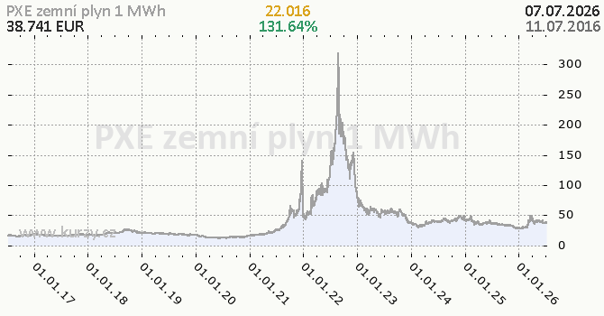
The current geopolitical situation clearly demonstrates how risky it is to rely solely on a single type of resource or fuel. This issue is all the more sensitive for the Czech market given that, in terms of natural gas supplies, we are currently heavily dependent, in terms of infrastructure, on transit routes through Germany. Any technical problem, legislative change or adjustment to transit charges by our neighbour can have an immediate impact on the cost of domestic operations.
This vulnerability became fully apparent in 2022. At that time, organisations focusing exclusively on natural gas faced a sharp rise in costs that could not be effectively mitigated. Heating plants with combined heat and power (CHP) generation maintained a relatively more stable position, as they were able to partially offset the high input costs of gas by selling electricity, the price of which was rising in parallel. However, operations with a diversified portfolio of energy sources proved to be significantly more resilient. The ability to swiftly shift the focus of production to alternative fuels, such as biomass, solid fuels, waste or heat generation from electricity, enabled these entities to mitigate the most severe impacts of the crisis and maintain economic stability.
The local energy mix and the architect’s role
There is no one-size-fits-all guide to the ideal energy source. Every location is unique in terms of its connection to the distribution network, the availability of a gas connection, meteorological and spatial conditions, or, for example, local energy sources. Designing the optimal solution therefore involves combining various energy elements in a way that delivers the best economic outcome in the long term. This is the domain of expert assessment, where, based on detailed, in-depth analyses of local constraints, the architecture of the future energy source is developed – one based not on guesswork, but on data.
The approach to modernising the energy sector to date has often been fragmented. An operator would commission a study on a biomass boiler, then another on a heat pump, and yet another on battery storage. The result is usually a desk full of conflicting documents, each advocating its own technology as the best. However, this is a recipe for an inefficient investment. A modern energy system requires a single architect who can see the broader context of all the opportunities and the site’s constraints. This architect must determine when it is pointless to consider waste at a specific location, or why a geothermal well lacks economic justification without state support. Instead of piling up isolated studies in a drawer, a comprehensive strategy for the next 10 to 15 years needs to be drawn up, one that determines the correct balance between the various energy sources. Only when the architect oversees the entire process, from the initial study right through to final construction, can it be ensured that the original economic objective is not lost in the technical details of implementation.
When designing a system, it is essential to move away from the principle of prioritising the lowest purchase price as the main selection criterion. Low capital expenditure (CAPEX), typical of stand-alone gas boilers, for example, is often offset by high operating costs (OPEX) that are difficult to control. The future is likely to belong to hybrid systems that combine various sources such as biomass, gas, combined heat and power units, electric boilers and heat pumps, all supplemented by robust heat and electricity storage. Whilst this combination requires a higher initial investment, in the long term it enables the operator, thanks to diversified sources, to switch flexibly between fuels depending on which source is the most cost-effective at any given moment.
Economic Optimisation in Practice: Technological Synergies
The right combination of elements makes it possible to achieve economic optimisation that is unattainable with a single technology. One example is the use of a heat pump in combination with an electric boiler. Whilst a heat pump, which is expensive to install, offers a high heating factor during transitional periods, its efficiency drops at extremely low temperatures or during temperature inversions. Investing in excess capacity is inefficient under such conditions. A strategically chosen mix, incorporating a cheaper electric boiler to help cover peak demand or take advantage of off-peak hours with extremely cheap electricity, optimises both the investment and the average running costs.
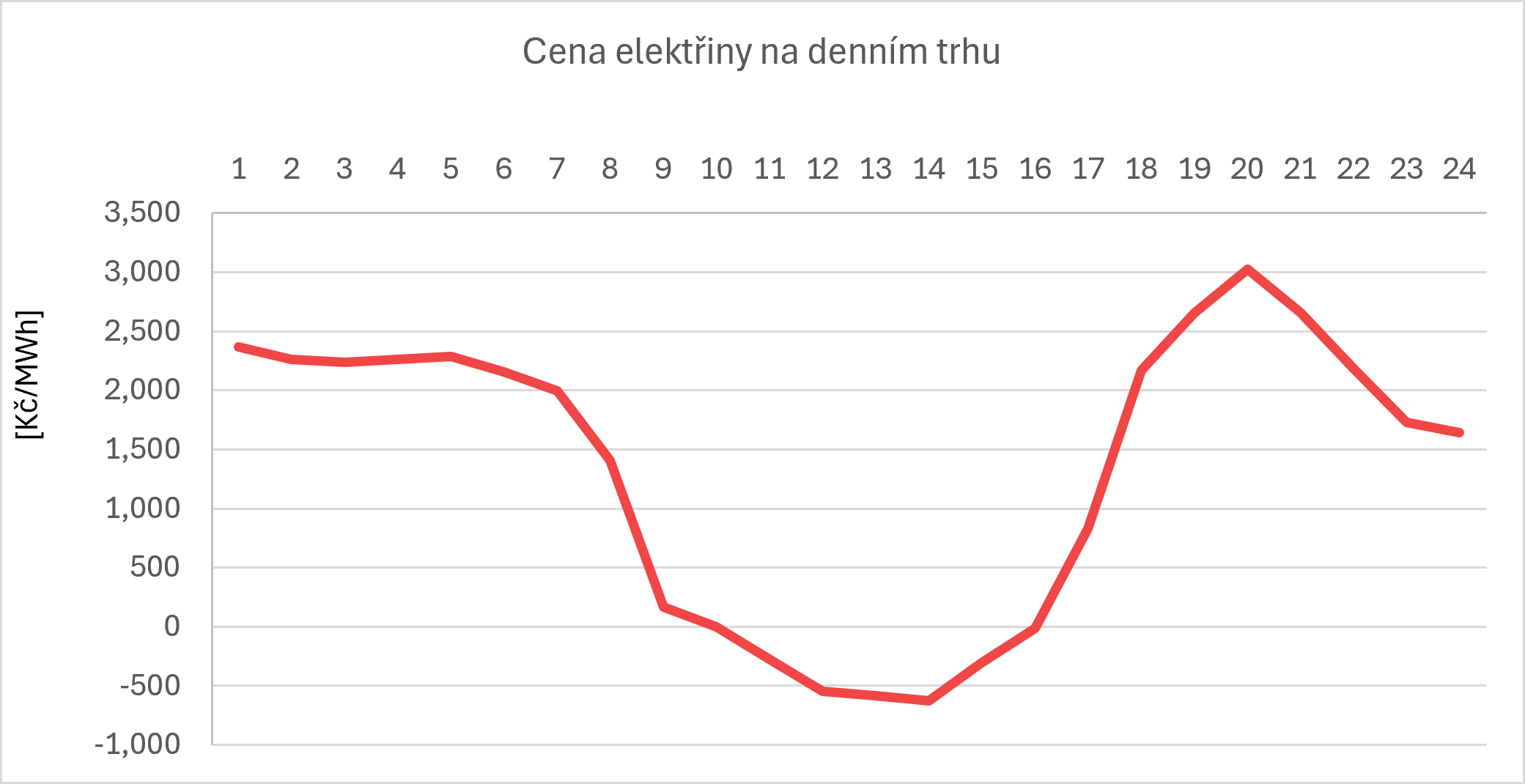
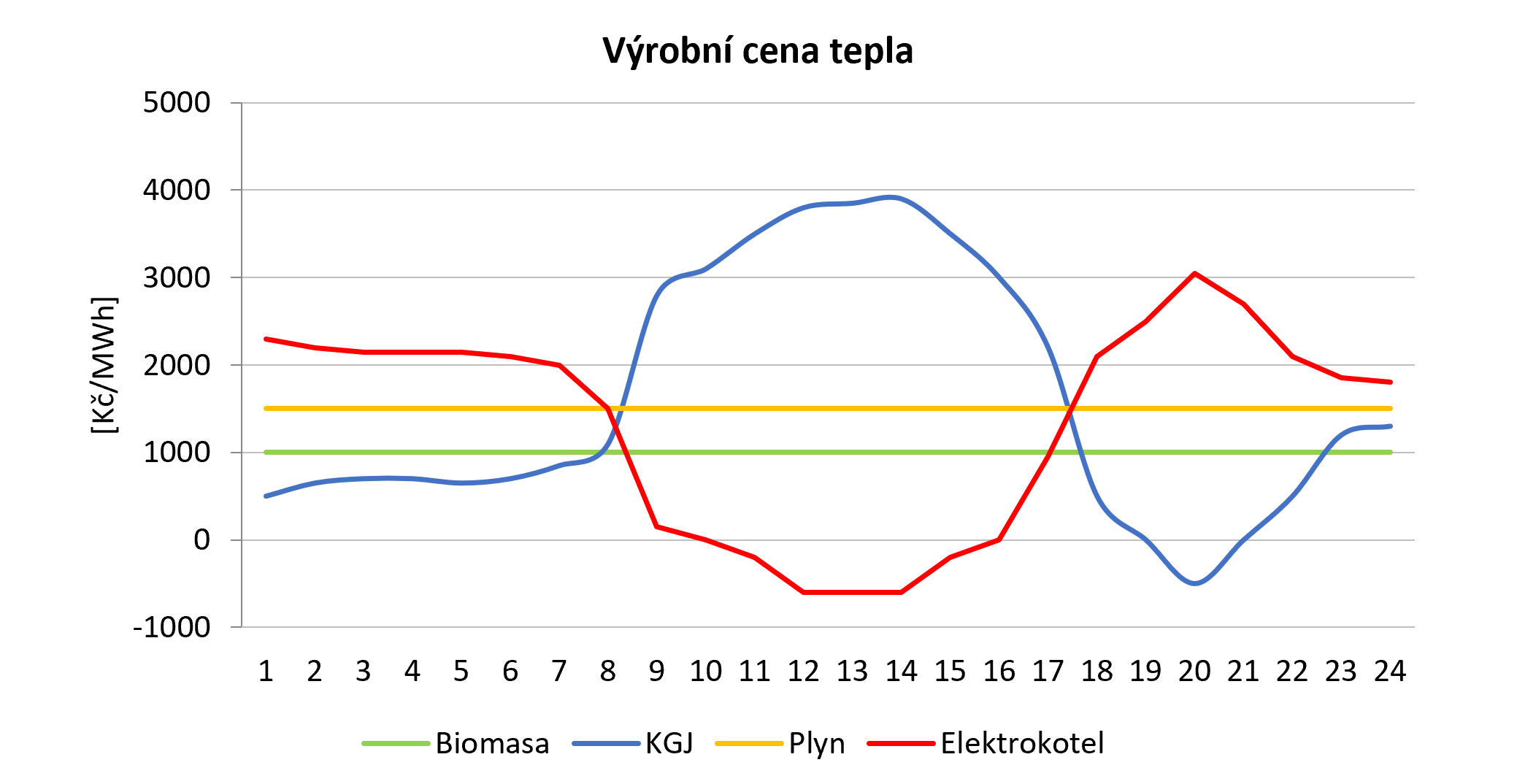
However, the true economic benefit will only be fully realised once these sources are integrated with combined heat and power (CHP), energy storage and a central control system. We can then generate both heat and electricity via CHP when electricity prices are high, and, conversely, generate heat using an electric boiler and a heat pump when there is a surplus of energy on the grid. If the system is thought through to its logical conclusion, we can also use our own photovoltaic generation directly to power heat pumps, thereby minimising distribution charges. Furthermore, with proper planning, peak demand can be significantly reduced. This chain of interlinked combinations dramatically increases the complexity of optimisation. However, if the architecture is designed systematically and with an emphasis on the interdependence of technologies, it can ultimately create a robust economic model that is resilient to fluctuations in individual markets.
Why trading won’t save a poorly designed proposal
We are often asked whether a technologically inflexible or poorly designed plant can be salvaged through professional trading. Experience shows that if the technology lacks the ability to respond flexibly and its control is the result of ad hoc or improvised adjustments, even high-quality trading management will not rectify the plant’s operational economics. Close communication amongst staff and extraordinary efforts by operators may help at certain moments, but they are not a systemic solution. The only solution is investment in systematic digitalisation and precise control of the technology, upon which one can then safely build. Otherwise, everything depends on the quality and perseverance of the staff, which poses a significant risk from the perspective of long-term operation.
In practice, the scope of errors in technical design is often enormous; nevertheless, whenever a cogeneration plant or significant energy consumption is in operation, there is always considerable scope for optimisation. However, the decisive factor is the precision of control. If an operator is unable to guarantee compliance with specified production and consumption parameters, they ultimately harm their own financial performance above all else. Without a digital platform that enables automated responses to market signals, it is very difficult to maintain effective operational control in the long term within the complex environment of the energy sector.
Emissions allowances as a catalyst for change
The topic of subsidies is often raised in debates on modernisation. From a strategic planning perspective, however, subsidy schemes should be viewed more as a tool to accelerate investment, rather than as its sole purpose. Even without subsidy support, new technologies are beginning to make increasingly sound economic sense, partly due to the pressure to decarbonise. If we factor in the gradual introduction of emission allowances under the ETS2 system, we will find that for plants running exclusively on natural gas and not included in the ETS1 system, this could mean a very significant increase in fuel costs. All this at a time when these plants are once again coming to terms with the impact of previous rises in gas prices.
In this context, it is no longer simply a matter of environmental stance, but of plain mathematics. Every increase in the price of an emissions allowance merely confirms that diversifying energy sources enhances a company’s price stability. Our task is to arrange the various elements alongside one another in such a way that their disadvantages cancel each other out, whilst their advantages are reinforced.
Strategic adaptability: A market in flux
The current market situation, characterised by significant fluctuations in energy prices throughout the day, will not last forever. The incentive to buy cheaply and sell at a profit naturally attracts new players, particularly in the fields of battery storage and flexible generation sources. As we can see from the example of California, massive investment in storage is already leading to a gradual convergence of price curves and a narrowing of market spreads. The current trend of significant price drops throughout the day is unlikely to persist in the long term. With the massive roll-out of storage, we can expect these price differences to gradually narrow.
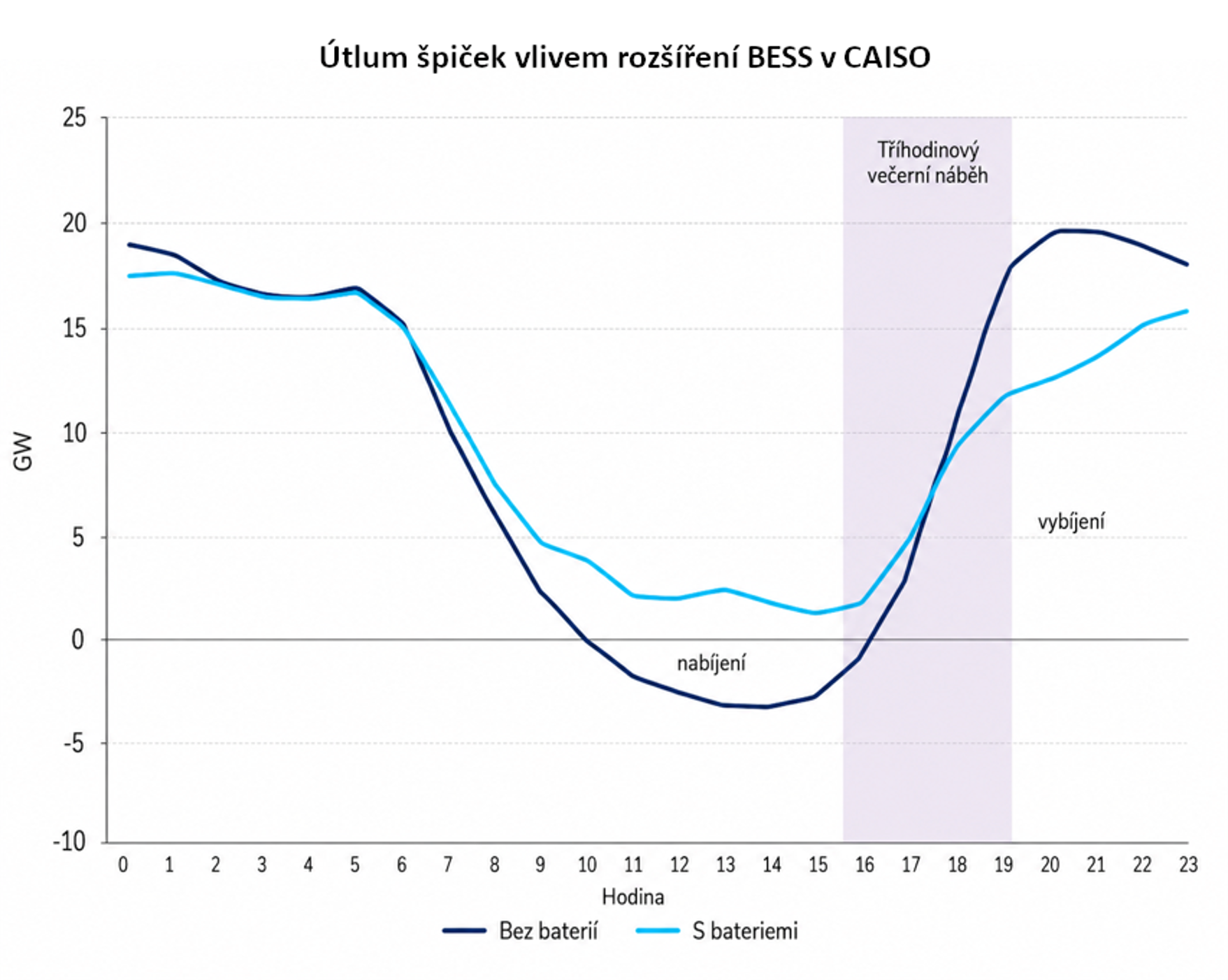
Similarly, such investments are having an increasingly significant impact on the ancillary services market. Individual projects are beginning to compete with one another to a greater extent, and the volume of activations carried out will continue to decline in the future as the market gradually manages its imbalance with ever greater precision through intraday trading. This trend is becoming increasingly apparent across the EU. However, it is important to bear in mind that political regulations, geopolitical events and changes in consumer behaviour could alter current market conditions very rapidly.
Remaining dependent on a single solution or a single market trend today means voluntarily exposing oneself to future risk. Whilst the need for operational flexibility will not disappear, the way in which assets need to be utilised will change. A well-designed technology mix prepares a business for the fact that the market will be constantly evolving. Only a resource offering multiple operational and commercial applications can respond to these structural changes in good time and retain its economic relevance even when today’s market anomalies become a thing of the past.
A unified strategy as a safeguard for investment
Modern energy today is not just about individual technologies, but above all about the ability to integrate them into a long-term, viable strategy. Various stakeholders come together throughout the entire life cycle of an energy system: technology suppliers, providers of ancillary services and exchange traders. It is precisely in this fragmented environment, however, that the greatest risk arises – that the original economic objective will be lost over the years. To prevent this from happening, it is essential to have unified strategic oversight of the entire process, which takes into account the broader context from the initial feasibility study right through to the final trading phase.
This oversight then makes it possible to chart a course for the next ten to fifteen years. The strategy does not merely determine which boiler or pump to purchase, but, above all, defines why a given solution has specific parameters and what role it will play in the future market mix. If the entire process – from design through construction to completion – is coordinated by a partner who understands the technology’s entire life cycle, this significantly reduces the risk of operational inefficiency and the premature depreciation of expensive technology due to inappropriate use.
In short, the energy sector today is no longer just about operating machinery, but about the long-term management of technology, its economics and the ability to respond to changing market conditions. Those who succeed in integrating these activities will turn their energy operations into a profitable and reliable asset.
Jan Krišpín, Chief Executive Officer of ORGREZ, a. s.
You can find a link to the magazine here.